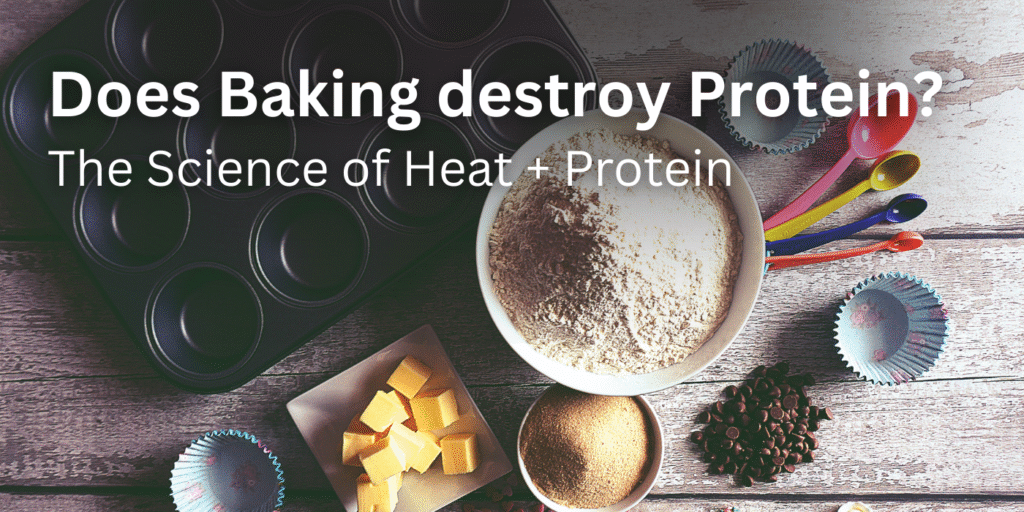
Does Baking Destroy Protein? The Science of Heat + Protein (Myths Debunked)
- What People Mean When They Say "Destroyed"
- Understanding Protein Structure: The Three-Dimensional Puzzle
- Real-World Evidence: Eggs, Meat, and More
- What About Protein Powder Specifically?
- Temperature Guidelines: What's Actually Safe
- Practical Implications for Protein Baking
- The Bottom Line: Your Protein Is Fine
- Still Wondering? Your Questions Answered
- References
Here’s a question that comes up constantly in protein baking circles: “If I bake my protein powder, am I destroying the protein and wasting my money?” It’s a fair concern. You’re adding expensive protein powder to your muffins or cookies, and then subjecting it to 350°F heat for 20 minutes. Surely something must be going wrong, right?
The short answer: No, baking does not destroy protein or eliminate its nutritional value. But the full answer is more interesting—and understanding what actually happens when you heat protein will make you a better baker and help you stop worrying about “ruining” your protein powder.
Let’s dive into the science, debunk some myths, and explain exactly what heat does (and doesn’t do) to protein.
What People Mean When They Say “Destroyed”
First, let’s clarify what we’re actually worried about. When people ask if heat “destroys” protein, they usually mean one of three things:
- Does heat break down protein into non-protein substances? (Spoiler: No)
- Does heat eliminate the amino acids that make protein valuable? (Spoiler: No)
- Does heat make protein less digestible or bioavailable? (Spoiler: Usually the opposite)
The confusion often stems from seeing protein powder clump, change texture, or behave differently when heated. Your protein pancakes don’t look or feel like your protein shake, so it’s natural to assume something fundamental has changed. Something has changed—but it’s not what you think.
Understanding Protein Structure: The Three-Dimensional Puzzle
To understand what heat does to protein, you need to understand what protein is. Proteins are long chains of amino acids linked together by strong chemical bonds called peptide bonds. Think of it like a beaded necklace where each bead is an amino acid and the string connecting them is a peptide bond.
But proteins don’t just exist as straight chains. They fold up into complex three-dimensional shapes—spirals, sheets, and complicated tangles. This folded structure is held together by weaker bonds: hydrogen bonds, ionic bonds, and hydrophobic interactions. These weak bonds are like temporary clips and magnets keeping the necklace coiled in a specific shape.
This three-dimensional shape is crucial for protein’s function in living organisms. Enzymes need specific shapes to catalyze reactions. Antibodies need specific shapes to recognize pathogens. Myosin and actin (proteins in muscles) need specific arrangements to contract and relax.
But here’s the key: protein’s nutritional value doesn’t depend on this three-dimensional shape. It depends on the amino acids themselves—the beads on the necklace, not how the necklace is folded.
What Actually Happens When You Heat Protein
When you apply heat to protein—whether you’re baking, cooking meat, or hard-boiling an egg—you’re adding energy to the protein molecules. This energy breaks those weak bonds (the hydrogen bonds, ionic bonds, and hydrophobic interactions) that hold the protein in its folded shape.
The protein unfolds. Its neat, compact structure unravels into a more random, extended form. This process is called denaturation.
Different proteins denature at different temperatures. In meat, myosin denatures between 40-53°C (104-127°F), collagen between 53-63°C (127-145°F), and actin between 68-80°C (154-176°F). In fish, myosin begins to denature as low as 104°F, while in land animals, myosin denatures in the range of 122-140°F.
Protein powders follow similar patterns. When you bake at typical temperatures (325-375°F or 163-191°C), you’re well above the denaturation temperature of whey, casein, and plant proteins.
The Critical Point: Peptide Bonds Remain Intact
Here’s what doesn’t happen during baking: The strong peptide bonds connecting amino acids don’t break. Your chain of amino acids remains a chain. The beads stay on the necklace.
What changes is only the three-dimensional shape—the way the chain is folded. The unfolded protein then forms new connections with other unfolded proteins nearby, creating aggregates or networks. This is why egg whites turn from clear liquid to solid white when cooked, and why protein powder makes baked goods denser.
But the amino acids—the actual nutritional building blocks your body needs—remain completely intact.
Does Denaturation Affect Nutritional Value?
Not only does denaturation not harm nutritional value, it often improves it. This seems counterintuitive, but here’s why.
Denatured Protein Is More Digestible
Proteins with tight globular forms or hydrophobic cores are naturally resistant to digestion. These structures are usually denatured by cooking, which changes their structure and exposes potential enzyme cleavage sites. When protein is folded tightly, digestive enzymes can’t easily access the bonds they need to break. When protein unfolds, those sites become accessible.
Moderate thermal processing treatments may induce structural changes that partially unfold the protein structure and reveal active sites for interactions with digestive proteases. These changes can improve food digestibility and maximize nutritional value by making cleavage sites more accessible.
Studies on cooked meat consistently show this effect. Cooking temperature modulates the speed of meat protein digestion without affecting the efficiency of small intestinal digestion. The overall digestibility and rate of digestion of meat proteins is enhanced compared to raw meat due to denaturation leading to exposure of the interior of the protein molecules.
In practical terms: Your baked protein muffin may actually be more nutritionally valuable than protein powder mixed into cold water, because your digestive system can break it down more efficiently.
The Exception: Extreme Heat + Other Factors
There’s a caveat. Protein quality can decrease when exposing foods to prolonged storage, heat sterilization, and high surface temperatures. Under extreme conditions—very high temperatures (above 300°F/150°C), especially combined with prolonged exposure, alkaline pH, or the presence of reducing sugars—proteins can undergo additional reactions that affect nutritional quality.
The Maillard reaction, which browns food and creates delicious flavors, involves reactions between proteins (specifically lysine residues) and reducing sugars. This reaction may make up to 30% of lysine biologically unavailable when proteins are heated in the presence of reducing sugars. However, this requires high heat for extended periods, typically in commercial processing or very aggressive cooking.
Normal baking conditions (325-375°F for 15-30 minutes) don’t create these problems. You’re not sterilizing canned goods or frying at 400°F+ for hours. You’re baking at moderate temperatures for short periods.
Plant Proteins and Antinutritional Factors
For plant-based proteins, cooking provides an additional benefit: Heat treatment results in marked decrease in trypsin inhibitors and improvement of protein digestibility for all reported process methods, explained by structural disintegration of the native protein concomitant with reduction or removal of anti-nutrients.
Many plant proteins contain antinutritional factors—compounds that interfere with protein digestion. Heat inactivates these compounds, making the protein more bioavailable. This is why heating plant proteins at temperatures below 100°C generally improves protein digestibility by changing protein structure and inactivating most antinutritional factors.
So if you’re using pea protein, soy protein, or other plant-based proteins in baking, you’re actually improving their nutritional value through cooking.
Real-World Evidence: Eggs, Meat, and More
Still skeptical? Consider the foods we’ve been cooking for thousands of years.
Eggs: An egg white transforms from clear liquid to solid white when heated. This is pure protein denaturation—the proteins unfold and form new networks. Yet cooked eggs are highly digestible (about 91% for hard-boiled eggs) and provide excellent protein nutrition. Raw egg whites, by contrast, contain avidin, which binds biotin and can cause deficiency, and trypsin inhibitors that reduce protein digestion. Cooking solves both problems.
Meat: Cooking meat results in 95% true ileal digestibility regardless of cooking temperature (60°C, 75°C, or 95°C). The amino acid composition of digested protein doesn’t change with cooking temperature. You get the same amino acids whether you eat rare steak or well-done—the only difference is texture and cooking speed.
Legumes: Raw beans are poorly digestible and even toxic in some cases. Cooking dramatically improves their protein digestibility. Treatment with microwave radiation significantly increased protein digestibility in faba beans from 46-52% to 76-78%.
If cooking destroyed protein, we’d have noticed over the past 10,000 years of cooking food. We’d see protein deficiency in populations that cook their food versus those that eat raw. We don’t, because cooking doesn’t destroy protein—it makes it more available.
What About Protein Powder Specifically?
Protein powder starts in a partially denatured state. Whey protein has already been heat-processed during manufacturing (the liquid whey is pasteurized, concentrated, and spray-dried). Pea protein is extracted using heat and processing. These proteins have already been unfolded and re-formed multiple times before they ever reach your kitchen.
When you bake with protein powder, you’re just denaturing it again. The proteins unfold, aggregate, and form networks—exactly what they’re supposed to do to create structure in baked goods. The amino acids remain intact throughout.
There is no evidence that baking protein powder at typical temperatures (325-375°F) for typical durations (15-30 minutes) reduces its nutritional value. The same amino acids that were in your scoop of protein powder before baking are still there after baking, just arranged differently.
Temperature Guidelines: What’s Actually Safe
Based on research and food science principles, here’s what you need to know about temperature and protein:
Safe and Beneficial Temperatures:
- Below 212°F (100°C): Denaturation occurs, digestibility improves, antinutrients inactivated. Optimal for most applications.
- 212-375°F (100-190°C): Standard baking range. Denaturation complete, minimal amino acid modification. This is where most home baking occurs.
Temperatures to Watch:
- 375-450°F (190-230°C): Higher end of baking. Some surface browning (Maillard reaction) occurs, but interior temperatures stay lower. Still safe for protein nutrition.
- Above 450°F (230°C): Extended exposure at these temperatures, especially with high sugar content, can begin to affect lysine availability. Most baking doesn’t reach these temperatures or doesn’t stay there long enough to matter.
The Reality Check: The internal temperature of your muffin or cookie never reaches oven temperature. When you bake at 350°F, the inside of your muffin might only reach 200-210°F. The thermal mass of the batter and evaporating water keep internal temperatures much lower than the oven setting.
Debunking Common Myths
Myth #1: “Protein powder becomes useless when heated”
Reality: Protein structure changes, but amino acid content and bioavailability remain intact. Your body breaks down protein into amino acids during digestion anyway—denaturation just starts that process early.
Myth #2: “You should only use protein powder in cold foods”
Reality: There’s no nutritional advantage to cold preparation. In fact, moderate heat treatments can improve protein digestibility through inactivating enzyme inhibitors and denaturing proteins so they’re more susceptible to enzymatic cleavage.
Myth #3: “Baked protein powder has fewer grams of protein”
Reality: Unless you’re literally burning your food to ash, the grams of protein don’t change. If you put 20g of protein powder in your muffin batter, you get 20g of protein in the finished muffins (divided among however many muffins you made).
Myth #4: “The white foam on protein pancakes means protein is destroyed”
Reality: That’s just air trapped in denatured protein networks, similar to meringue. It’s a sign that protein is doing what it’s supposed to do—creating structure. The nutritional value is unchanged.
Myth #5: “Plant proteins are especially fragile when heated”
Reality: Heating plant proteins below 100°C improves protein digestibility by changing protein structure and inactivating antinutritional factors. Plant proteins may actually benefit more from heating than animal proteins.
Practical Implications for Protein Baking
Understanding the science translates to better baking practices:
Stop Worrying About “Ruining” Your Protein Powder You’re not damaging it. Bake with confidence. The amino acids are stable at normal baking temperatures.
Focus on Texture, Not Nutrition When troubleshooting protein baking, worry about moisture, structure, and taste—not whether you’re destroying nutrients. You’re not.
Temperature Adjustments Are About Texture When we recommend lowering baking temperature for protein baked goods, it’s not to protect nutritional value. It’s because denatured protein cooks faster and can dry out or over-brown. Lower temperatures give you better texture, not better nutrition.
Don’t Avoid High Heat Out of Fear If your recipe calls for 375°F or 400°F, use it. The brief exposure and moderate internal temperatures won’t harm protein nutrition.
Consider This When Choosing Protein Sources The fact that cooking improves protein digestibility means you don’t need to spend extra money on “raw” or “non-denatured” protein powders for baking. Regular whey concentrate, whey isolate, pea protein, or whatever you normally use works perfectly fine.
The Bottom Line: Your Protein Is Fine
Let’s tie this all together with what really matters:
When you bake with protein powder, heat causes denaturation—the protein unfolds from its complex folded shape into a more random structure. This is a physical change in the protein’s three-dimensional form, not a chemical destruction of its amino acid chains. The peptide bonds holding amino acids together remain intact.
Far from being harmful, this denaturation often makes protein more digestible because it exposes cleavage sites to digestive enzymes and inactivates antinutritional factors (especially in plant proteins). Studies consistently show that cooking improves protein digestibility compared to raw consumption.
Normal baking temperatures (325-375°F) and durations (15-30 minutes) do not damage amino acids or significantly reduce bioavailability. Only extreme conditions—very high temperatures for prolonged periods, especially in the presence of reducing sugars at alkaline pH—can cause problematic modifications, and these conditions don’t occur in home baking.
Your protein muffin, protein pancake, or protein cookie contains the same amount of usable protein as the powder you started with. The only thing that’s changed is the structure, and that change is actually beneficial for digestion.
So bake away. Your protein powder was designed to withstand processing, and your oven is not hot enough to undo its nutritional value. Focus your energy on creating delicious, well-textured baked goods, not on unnecessary worries about destroying protein.
Still Wondering? Your Questions Answered
References
[1] Tornberg, E. (2005). Effects of heat on meat proteins – Implications on structure and quality of meat products. Meat Science, 70(3), 493-508.
[2] Dominguez-Hernandez, E., Salaseviciene, A., & Ertbjerg, P. (2018). Low-temperature long-time cooking of meat: Eating quality and underlying mechanisms. Meat Science, 143, 104-113.
[3] Murphy, R. Y., & Marks, B. P. (2000). Effect of meat temperature on proteins, texture, and cook loss for ground chicken breast patties. Poultry Science, 79(1), 99-104.
[4] Yu, T. Y., Morton, J. D., Clerens, S., & Dyer, J. M. (2017). Cooking-induced protein modifications in meat. Comprehensive Reviews in Food Science and Food Safety, 16(1), 141-159.
[5] Santé-Lhoutellier, V., Astruc, T., Marinova, P., Greve, E., & Gatellier, P. (2008). Effect of meat cooking on physicochemical state and in vitro digestibility of myofibrillar proteins. Journal of Agricultural and Food Chemistry, 56(4), 1488-1494.
[6] Astruc, T., Marinova, P., Labas, R., Gatellier, P., & Santé-Lhoutellier, V. (2012). Detection and localization of oxidized proteins in muscle cells by fluorescence microscopy. Journal of Agricultural and Food Chemistry, 60(48), 12057-12064.
[7] Li, K., Ye, W., & Singh, S. (2021). Effect of thermal treatment on the structure and functionality of muscle protein from channel catfish (Ictalurus punctatus). Food Chemistry, 341, 128230.
[8] Bax, M. L., Aubry, L., Ferreira, C., Daudin, J. D., Gatellier, P., Rémond, D., & Santé-Lhoutellier, V. (2012). Cooking temperature is a key determinant of in vitro meat protein digestion rate: investigation of underlying mechanisms. Journal of Agricultural and Food Chemistry, 60(10), 2569-2576.
[9] Bhat, Z. F., Morton, J. D., Zhang, X., Mason, S. L., & Bekhit, A. E. D. A. (2020). Sous-vide cooking improves the quality and in vitro digestibility of Semitendinosus from culled dairy cows. Food Research International, 127, 108708.
[10] Bhat, Z. F., Morton, J. D., Bekhit, A. E. D. A., Kumar, S., & Bhat, H. F. (2021). Thermal processing implications on the digestibility of meat, fish and seafood proteins. Comprehensive Reviews in Food Science and Food Safety, 20(4), 4511-4548.
[11] Gilani, G. S., Xiao, C. W., & Cockell, K. A. (2012). Impact of antinutritional factors in food proteins on the digestibility of protein and the bioavailability of amino acids and on protein quality. British Journal of Nutrition, 108(S2), S315-S332.
[12] Salazar-Villanea, S., Hendriks, W. H., Bruininx, E. M., Gruppen, H., & van der Poel, A. F. (2016). Protein structural changes during processing of vegetable feed ingredients used in swine diets: Implications for nutritional value. Nutrition Research Reviews, 29(1), 126-141.
[13] Buffière, C., Gaudichon, C., Hafnaoui, N., Migné, C., Scislowski, V., Khodorova, N., … & Rémond, D. (2014). In the elderly, meat protein assimilation from rare meat is lower than that from meat that is well done. The American Journal of Clinical Nutrition, 100(5), 1273-1278.
[14] Oberli, M., Marsset-Baglieri, A., Airinei, G., Santé-Lhoutellier, V., Khodorova, N., Rémond, D., … & Fiszlewicz, M. (2015). High temperature, but not pasteurization, affects the postprandial kinetics of milk proteins in humans. Journal of Nutrition, 145(9), 2152-2160.
[15] Barbé, F., Ménard, O., Le Gouar, Y., Buffière, C., Famelart, M. H., Laroche, B., … & Dupont, D. (2013). The heat treatment and the gelation are strong determinants of the kinetics of milk proteins digestion and of the peripheral availability of amino acids. Food Chemistry, 136(3-4), 1203-1212.
[16] Carbonaro, M., Grant, G., Cappelloni, M., & Pusztai, A. (2005). Perspectives into factors limiting in vivo digestion of legume proteins: antinutritional compounds or storage proteins? Journal of Agricultural and Food Chemistry, 53(23), 8819-8825.
[17] Gilani, G. S., Cockell, K. A., & Sepehr, E. (2005). Effects of antinutritional factors on protein digestibility and amino acid availability in foods. Journal of AOAC International, 88(3), 967-987.
[18] Duodu, K. G., & Minnaar, A. (2020). Legume composite flours and baked goods: Nutritional, functional, sensory, and phytochemical qualities. In Flour and Breads and their Fortification in Health and Disease Prevention (pp. 123-137). Academic Press.
[19] Evenepoel, P., Geypens, B., Luypaerts, A., Hiele, M., Ghoos, Y., & Rutgeerts, P. (1998). Digestibility of cooked and raw egg protein in humans as assessed by stable isotope techniques. The Journal of Nutrition, 128(10), 1716-1722.
[20] van Lieshout, G. A., Lambers, T. T., Bragt, M. C., & Hettinga, K. A. (2020). How processing may affect milk protein digestion and overall physiological outcomes: A systematic review. Critical Reviews in Food Science and Nutrition, 60(14), 2422-2445.
[21] Nosworthy, M. G., Medina, G., Franczyk, A. J., Neufeld, J., Appah, P., Utioh, A., … & House, J. D. (2018). Effect of processing on the in vitro and in vivo protein quality of beans (Phaseolus vulgaris and Vicia Faba). Nutrients, 10(6), 671.