Fruit is not a protein powerhouse — and that’s actually fine.
Most people land here because they’ve seen a headline claiming some fruit is secretly “high in protein,” and they want to know if that’s true before they build a meal around it.
It’s a fair question, and it deserves a fair answer.
Some fruits genuinely do carry more protein than others, even if none of them come close to eggs, beans, or yogurt. This guide walks through the real numbers, fruit by fruit, and then shows you how to use fruit as part of a meal or dessert that actually supports your protein goals — without pretending fruit is something it isn’t.
In this article
Which Fruit Has the Most Protein?
Quick answer: Guava tops the list among commonly eaten fruits, with about 2.55 grams of protein per 100 grams — roughly 4 grams per cup [1]. Avocado follows close behind at around 2 grams per 100 grams, and jackfruit lands just under that at about 1.7 grams [2][3].
That might sound underwhelming, and it should. A single large egg has about 6 grams of protein — more than double what a full cup of guava provides. Fruit was never designed by nature to be a protein source; it’s built around natural sugars, water, and fiber. The fruits above simply do the best job among fruits, which is a very different claim than being a meaningful protein source on their own.
Protein in Fruit — The Full Chart (per 100g)
| Fruit | Protein per 100g |
|---|---|
| Guava | 2.55 g |
| Avocado | ~2.0 g |
| Jackfruit | ~1.7 g |
| Passion fruit | ~2.2 g* |
| Blackberries | ~1.4 g |
| Raspberries | ~1.2 g |
| Kiwi | ~1.1 g |
| Banana | ~1.1 g |
| Orange | ~0.9–1.3 g |
| Strawberry | 0.67 g |
| Apple | ~0.27 g |
| Dragon fruit | under 0.5 g** |
*Passion fruit figures vary noticeably between sources; treat this as an approximate range rather than a precise figure. **See the dragon fruit note below.
How Much Protein Is Really in Everyday Fruits Like Banana and Apple?
Banana, one of the most-searched fruits for protein content, holds a modest 1.1 grams per 100 grams — a medium banana gets you just over a gram [4]. Apple sits at the low end of the fruit world, with only about 0.27 grams per 100 grams, which is one reason it’s better known for fiber than protein. Strawberries land in between, at 0.67 grams per 100 grams, confirmed directly against USDA data [5]. None of these numbers are going to move the needle on their own, and that’s exactly the point of the next section.
Why Fruit Isn’t a Real Protein Source (Even the “High-Protein” Ones)
Even guava, the top performer here, would require you to eat about 2 kilograms of it to match the protein in a single chicken breast. That’s not a criticism of guava — it’s a reminder of what fruit is actually good at. Fruit brings water content, natural sweetness, antioxidants, and vitamin C in amounts that real protein foods rarely match. Treating fruit as a protein strategy misses what makes it valuable in the first place, and it can quietly crowd out foods that actually do the protein job well, like eggs, legumes, fish, dairy, or a scoop of protein powder.
This matters beyond nutrition trivia. A diet built entirely around maximizing protein — while ignoring everything else a plate needs — isn’t actually a complete way to eat.
If you’re curious how much protein your body actually needs each day, our guide to what protein is and how much you need breaks it down.
The Nutrient Most “Protein in Fruit” Conversations Skip: Fiber
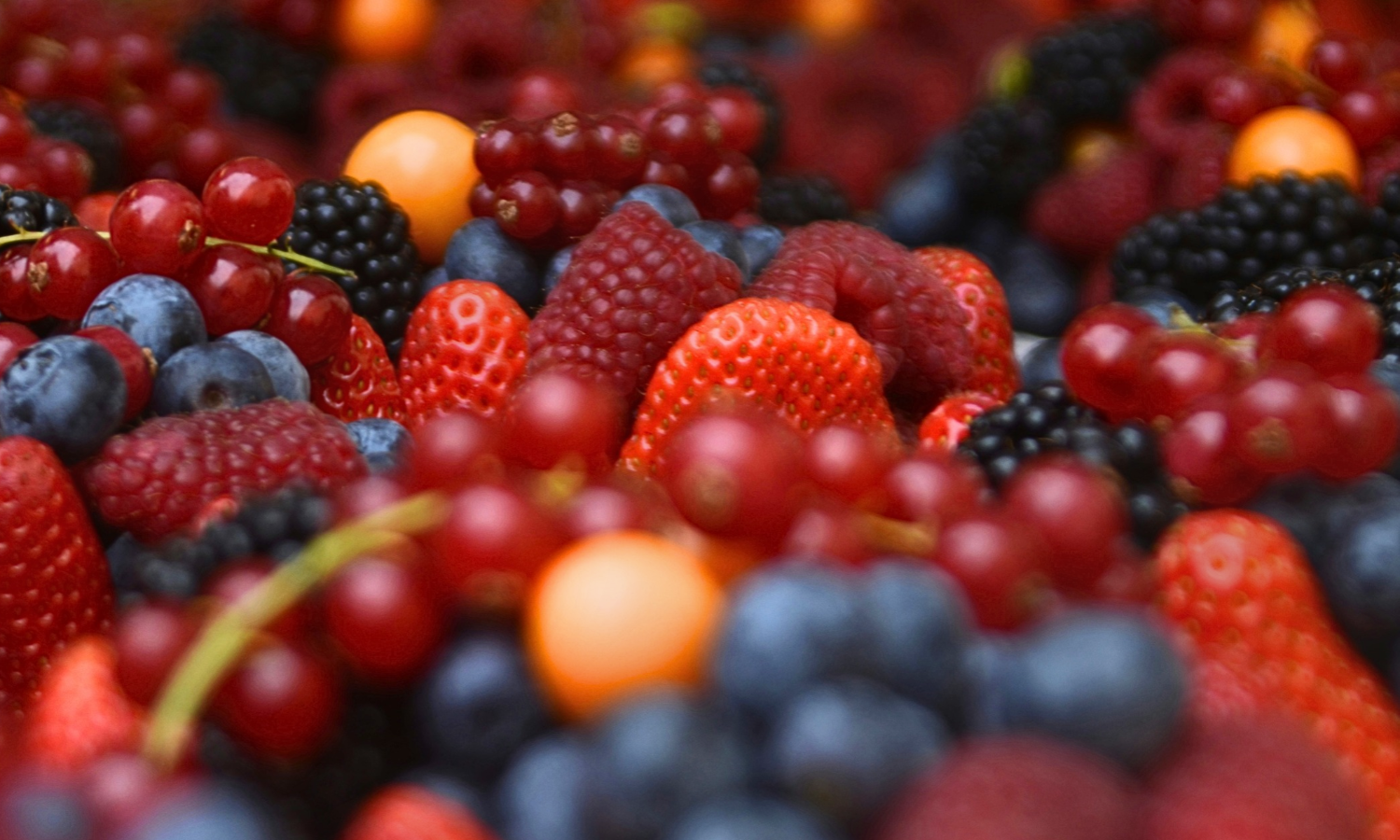
Here’s where fruit earns its place at the table. Adults under 50 are generally advised to get around 25 grams of fiber a day for women and 38 grams for men, according to U.S. Dietary Guidelines and the Academy of Nutrition and Dietetics [6][7]. Most American adults fall well short of that, averaging closer to 15 grams a day [7]. Fruit — including several of the same ones on this list — is one of the easiest ways to close that gap, since a single cup of raspberries or blackberries can carry 6 to 8 grams of fiber alongside their modest protein content.
This is exactly why an “only protein matters” mindset misses something important. A diet that maximizes protein while ignoring fiber isn’t more complete — it’s just optimized for a different single number.
How to Actually Add Protein (and Fiber) to Fruit
None of these need to be complicated. The goal is simply to pair a fiber-rich fruit with a real protein source, so the meal or snack does both jobs at once:
- Smoothie: blend guava, banana, or berries with Greek yogurt or a scoop of protein powder
- Baked goods: fold blackberries or banana into a muffin batter made with a protein-boosted flour or added egg
- Frozen dessert: blend fruit into a protein-based ice cream or nice cream base
- Gelatin or chia pudding: layer fruit with a protein-set gelatin or chia pudding made with milk or a protein-rich milk alternative
- Pancakes: top a batch made with a protein-forward batter with sliced fruit instead of syrup
(As we build out full recipes for each of these, we’ll link them directly from this list.)
Fresh vs. Dried Fruit — Does Protein Change?
Drying fruit removes water, which concentrates everything left behind — including protein, but also sugar and calories. So dried fruit will generally show a higher protein number per 100 grams than the same fresh fruit, but it’s not because the fruit gained protein; it just lost water. It’s worth treating dried fruit as a concentrated version of the same fruit, not a meaningfully different protein source. (We’ll cover this in more depth in a dedicated guide.)
A Note on Dragon Fruit
Dragon fruit deserves its own honesty check. Sources disagree sharply on its protein content, with figures ranging from under half a gram to over 3 grams per 100 grams — a difference far too large to be simple rounding. We weren’t able to confirm an exact figure directly against a primary USDA entry, so rather than pick the most dramatic number, we’re reporting the lower, more conservative estimate here. If you see dragon fruit described elsewhere as unusually high in protein, treat that claim with some skepticism until it’s backed by a clear primary source.
One Thing to Try This Week
Pick one fruit from this list you already enjoy, and pair it with a real protein source just once this week — guava or berries with Greek yogurt, or a banana blended into a protein smoothie. That one small pairing does more for your plate than chasing a protein number in fruit ever will.
Bibliography
- FoodData Central. (n.d.). Guavas, common, raw (FDC ID 173044). U.S. Department of Agriculture, Agricultural Research Service.
- GoodRx Health. (2024). 10 Fruits High in Protein: Avocados, Guava, and More.
- MedicineNet. (2022). Which Fruits Have the Highest Protein?
- Have A Plant / Produce for Better Health Foundation. (n.d.). Which fruits and vegetables have the most protein?
- FoodData Central. (n.d.). Strawberries, raw (FDC ID 167762). U.S. Department of Agriculture, Agricultural Research Service.
- U.S. Department of Health and Human Services & U.S. Department of Agriculture. (2020). Dietary Guidelines for Americans, 2020–2025.
- Academy of Nutrition and Dietetics. (2023). Easy Ways to Boost Fiber in Your Daily Diet.